How can water be used more responsibly, and why is water retention becoming so important for agriculture and rural communities?
These questions are at the centre of the short film “Full of Energy in the Styrian Volcanic Region” at Cambium in Fehring, which presents Cambium’s approach to climate-resilient water management and community living in Styria, Austria. In the interview, Ruth Rehwald and Tomas Stoisser explain how the community is working with water reuse, soil moisture conservation and nature-based treatment systems in practice.
Cambium is described as a vibrant place of research. Around 60 people, including approximately 15 children, live there together and contribute to the community in different ways. Beyond everyday life, Cambium explores more sustainable and socially fulfilling forms of living, working and farming together.
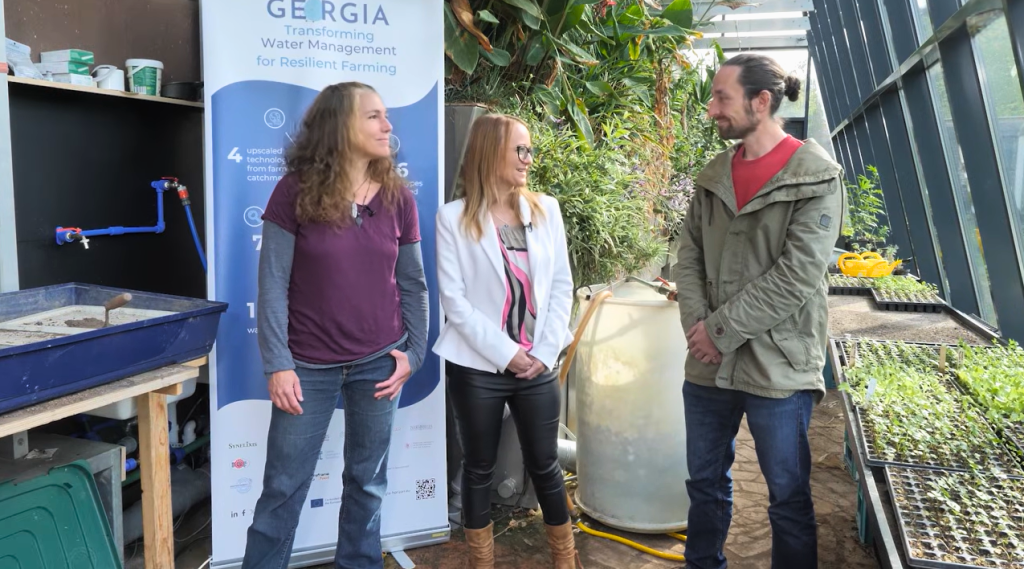
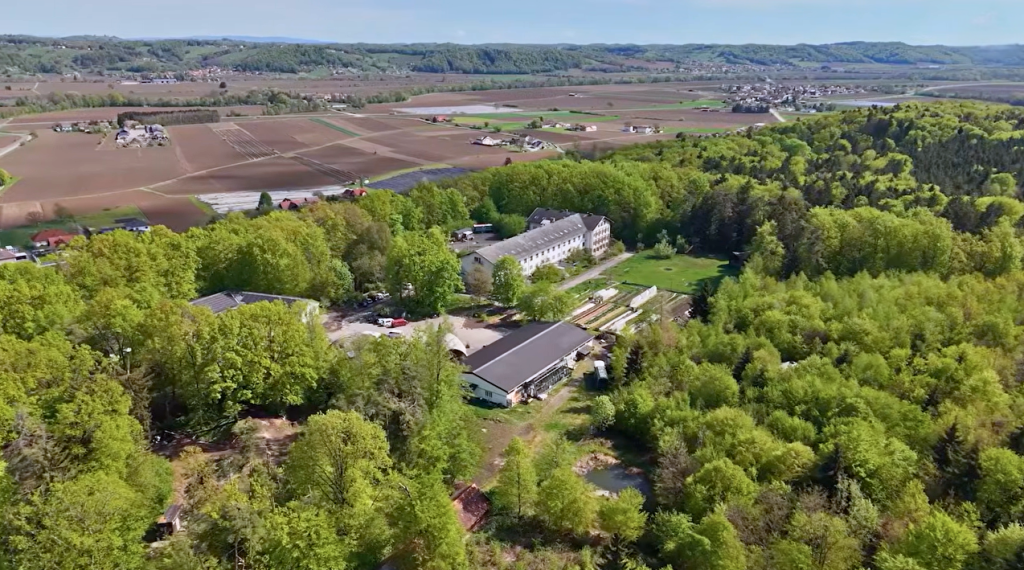
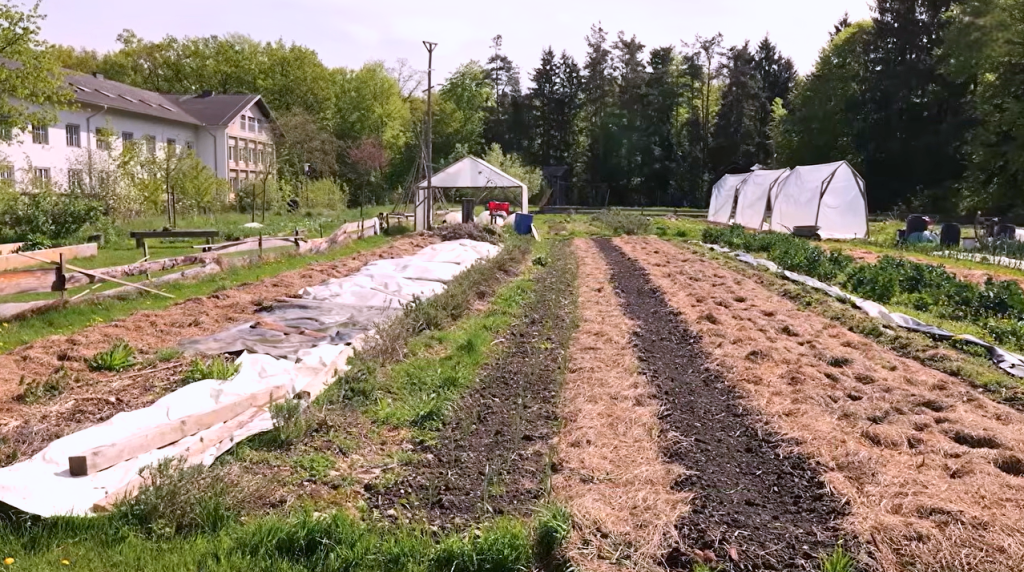
Water plays a central role in this endeavour. The community manages several hectares of land, including around five hectares of grassland grazed by sheep, orchards and a vegetable garden of 1,500 m². In recent years, longer dry periods in summer have become more noticeable, sometimes lasting four to five weeks without rainfall. These conditions make water retention, soil moisture conservation and efficient irrigation increasingly important.
When rainfall does arrive, the aim is to help it infiltrate the soil, keep the ground moist and remain in the landscape for longer. This benefits both the natural environment and those managing the land. At the same time, the vegetable garden requires regular irrigation during the summer, especially under intensive market gardening conditions.
Rather than relying mainly on groundwater, Cambium is exploring how rainwater and treated wastewater can be used more effectively. The community produces around six cubic metres of wastewater per day, which would normally be discharged to a wastewater treatment plant. Instead, part of this water is treated on site through a vertECO® vertical green wall system. The system currently treats close to one cubic metre per day, with plans to further improve its performance.
The treated water is used to irrigate the vegetable garden through underground irrigation pipes and can be combined with rainwater collection. For Cambium, treated wastewater is not seen as waste, but as a resource that can be safely returned to productive use when properly treated and monitored.
This is where GEORGIA contributes. As part of the project, Cambium monitors how treated wastewater affects crops and growing conditions. The monitoring looks at whether reclaimed water is suitable for irrigation and whether issues such as excess nutrients need to be considered. The aim is to generate practical knowledge that can support safe water reuse and potentially inspire similar approaches elsewhere.
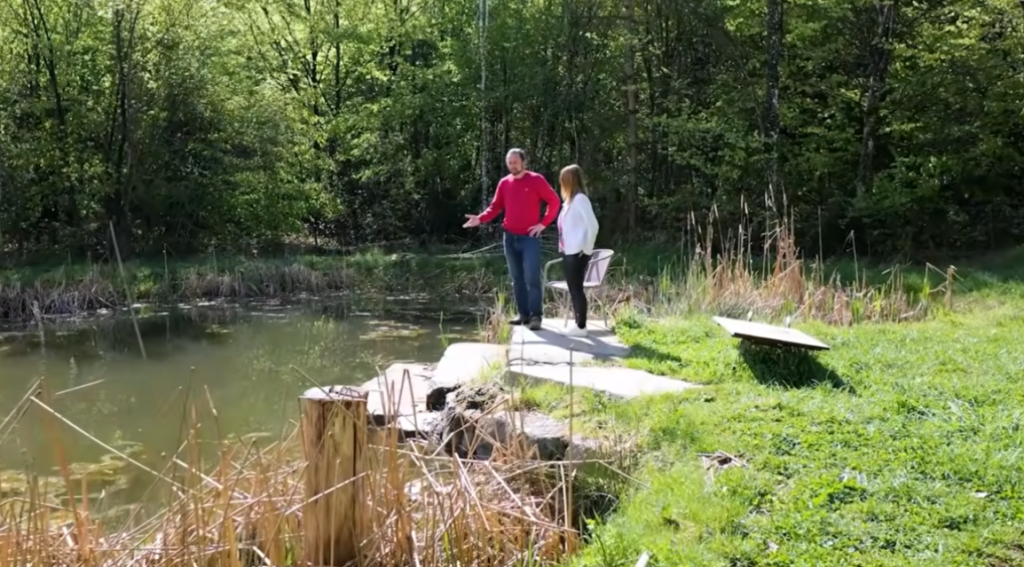
The interview also highlights that circular resource management is not only about water. Nutrients are part of the system as well. Through the treatment process, solids are retained as sludge and can be further processed, dried, composted and hygienised with the support of plant-based systems like the sewage sludge drying reed bed. In this way, nutrients can potentially be recovered and returned to agricultural land, helping to close local water and nutrient cycles.
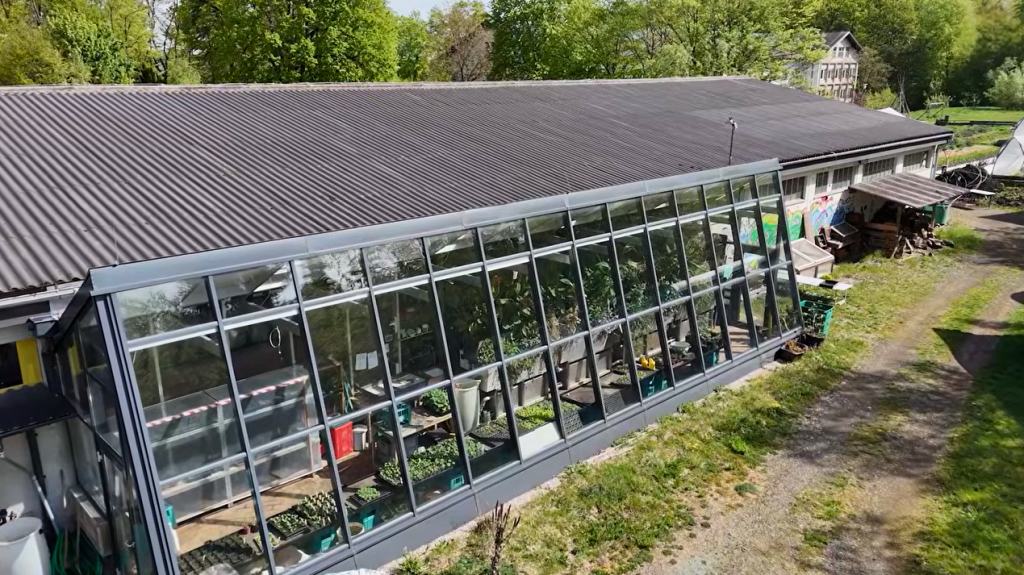
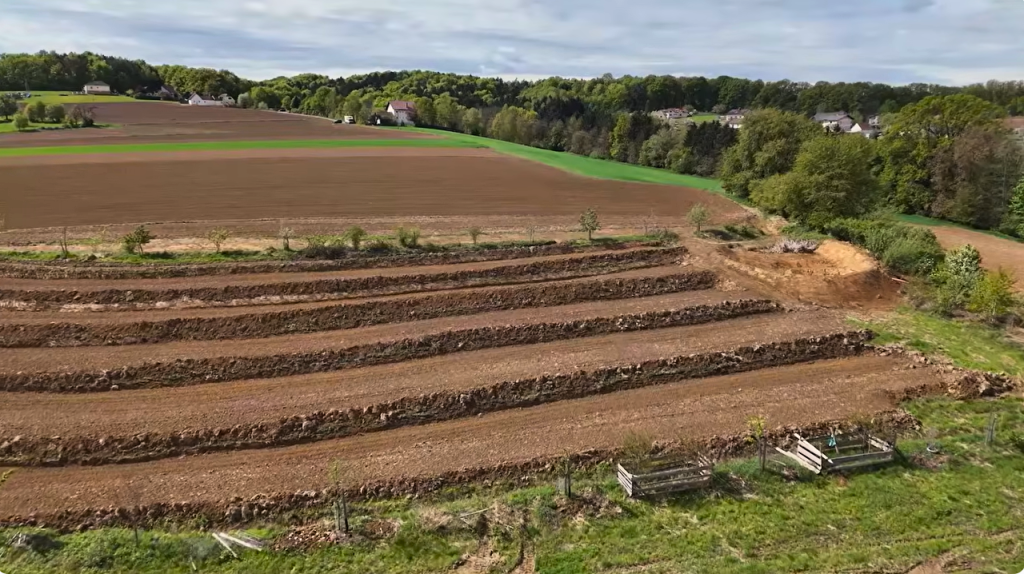
Looking ahead, Cambium plans to expand and optimise the system. One possible step mentioned in the interview is the separation of blackwater and greywater, which could allow more water to be treated and reused locally.
For GEORGIA, the Cambium pilot offers a practical example of how community-based innovation, nature-based treatment and circular water use can come together. By testing and monitoring water reuse in real conditions, the work in Fehring contributes to wider efforts to build more resilient, resource-efficient and water-secure agricultural systems.