


Written by alchemia-nova
In a world where climate change exerts unprecedented pressure on our natural resources, water is becoming an increasingly precious commodity. Traditional sources like rivers and groundwater are strained, forcing us to rethink how we approach agriculture and irrigation. The GEORGIA project is at the forefront of this paradigm shift, exploring innovative and sustainable ways to secure water for farming. But what if one of the most promising solutions isn’t hidden underground, but all around us, in the very air we breathe?
The Sky as a Reservoir: Atmospheric Water Condensation (AWC)
It sounds like science fiction, but the principle is as simple as the condensation on a cold bottle of water on a summer day. The air naturally holds a vast amount of water in the form of vapor. Atmospheric Water Condensation (AWC) encompasses a range of technologies designed to capture this invisible resource by cooling a surface below the dew point, causing the vapor to turn back into liquid water.
Within GEORGIA, partners like alchemia-nova (ANRI) are exploring a variety of low-cost, decentralized AWC prototypes that can operate in different environments:
- Passive Systems: These clever designs work without external energy. They use principles like radiative cooling, where a specially coated surface (like on the “Water Flower”) radiates heat to the cold night sky, becoming cool enough to collect dew.
- Active Systems: To increase water yield, active systems use a small amount of energy—ideally from renewable sources like solar PV—to power a heat pump (such as in an upcycled refrigerator). This provides controlled cooling to condense water even when passive conditions aren’t perfect.
These systems are designed to be built with local materials and are adapted to the specific needs of the demo sites on Santorini, Cyprus and Austria, where they can provide a crucial, independent source of high-purity water for irrigation or even drinking.

Figure 1: A variety of AWC prototypes developed and tested, Greenhouse Condenser on the left, Water Flowers in the middle, a water flower adapted to Santorini traditional vines (“Kouloura”)
A Step Further: The Solar Desalination Greenhouse (SDGH)
But what if we could combine freshwater production with crop cultivation, especially in areas plagued by saline soils? This is where the Solar Desalination Greenhouse (SDGH) comes in. This technology creates a self-contained, circular ecosystem with a dual benefit.
Here’s how it works:
- Saline Water In: Brackish or saline water—unsuitable for most crops—is used to irrigate salt-loving plants, called halophytes, grown in a vertical hydroponic system inside the greenhouse.
- Nature’s Distiller: The halophytes act as natural bioreactors. They absorb the saline water, retain the salt in their tissues, and release pure, distilled water vapor through transpiration.
- Trapping Humidity: The greenhouse structure traps this clean, humid air.
- Freshwater Out: Active and passive condensation surfaces collect this moisture, producing high-quality freshwater.
The result is a two-for-one solution: it generates freshwater for irrigating other conventional crops while also producing a valuable biomass of halophytes that can be used for animal feed, food, or even for extracting high-value products like essential oils.
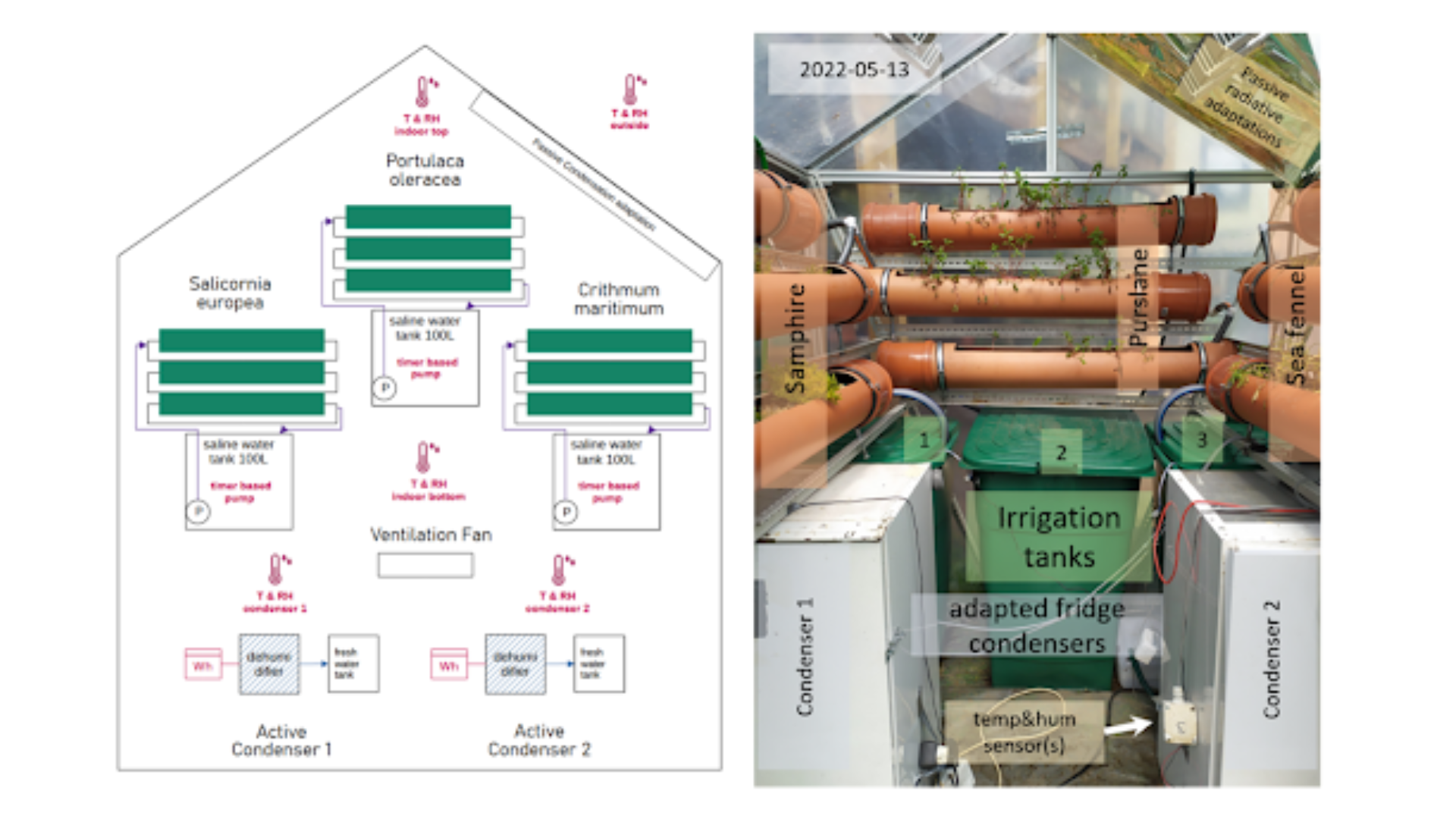
Figure 2: The Solar Desalination Greenhouse (SDGH) creates a closed-loop system, using saline water and halophytes to produce both fresh water and valuable biomass.
Why This Matters for GEORGIA
Both AWC and the SDGH embody the core principles of the GEORGIA project: increasing agriculture’s resilience to drought through innovative, sustainable, and accessible solutions. Instead of relying solely on large-scale, centralized infrastructure, these technologies offer:
- Decentralization: They can be deployed at the farm or community level, providing water security where it’s needed most.
- Sustainability: They rely on abundant resources—ambient humidity and solar energy—and promote a circular economy for water.
- Adaptability: They can be tailored to local climates, resources, and skillsets, supplementing rather than replacing existing irrigation methods.
Looking Ahead
By pioneering and testing these alternative water sources in our pilot sites, the GEORGIA project aims to provide farmers with a diverse toolkit to combat water scarcity. Harvesting water from the air is no longer a futuristic dream but a practical and promising pathway toward a more resilient and sustainable agricultural future in Europe and beyond.
Stay tuned as we share results from our pilot implementations


