


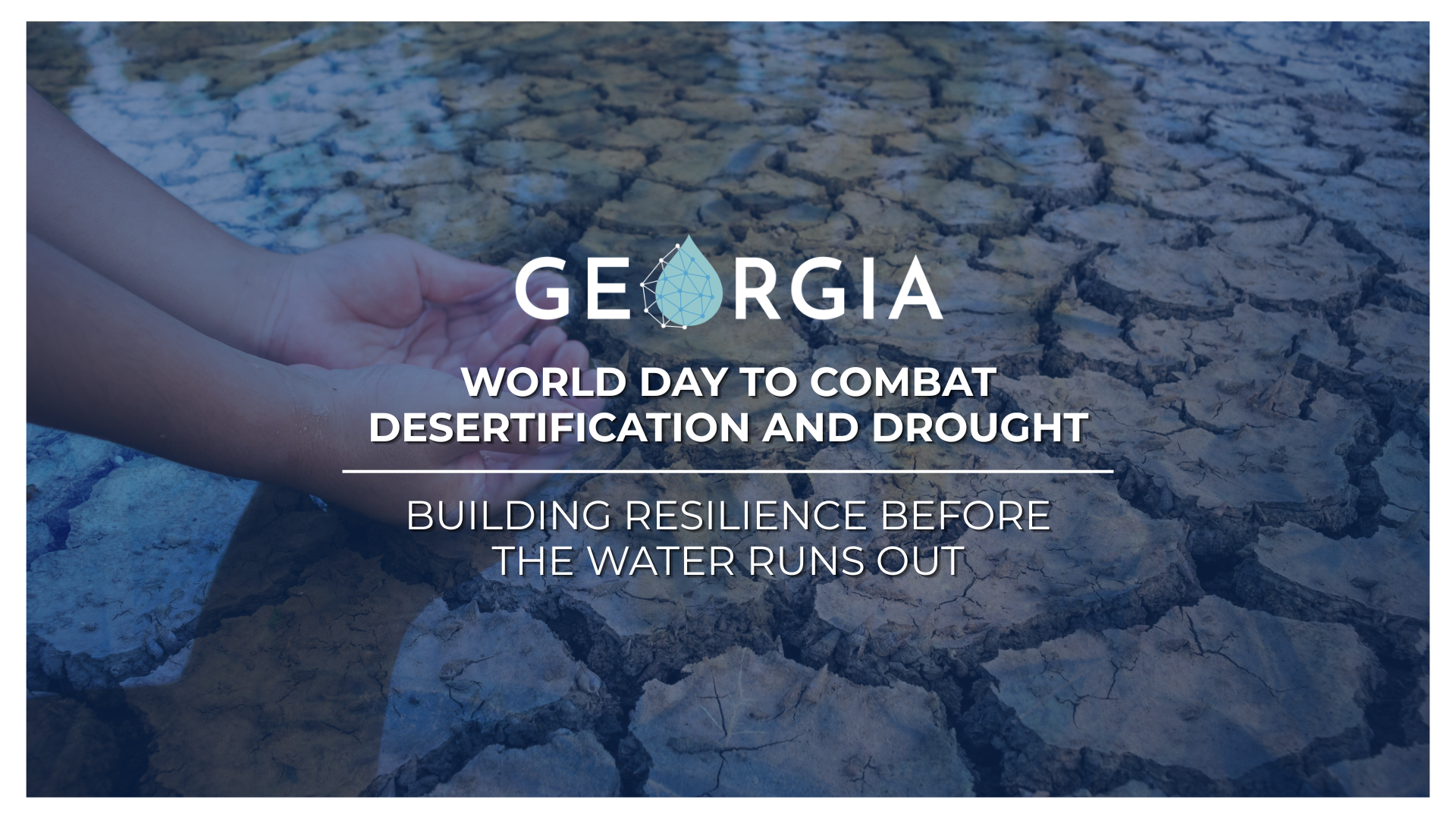
A dry field rarely becomes a crisis overnight.
Long before drought is visible in cracked soil, reduced yields or stressed crops, pressure has already been building inside the system. Rainfall becomes less predictable. Soil loses part of its capacity to retain moisture. Irrigation decisions become harder to plan. Groundwater and surface water resources come under increasing pressure. Farmers are asked to produce more with less certainty, less water and less room for error.
This is why desertification and drought are not only environmental issues. They are agricultural, economic and social challenges that affect how food is produced, how rural areas adapt, and how landscapes remain productive under changing climate conditions.
Desertification is often imagined as the sudden expansion of deserts. In reality, it is a slower and more complex process. It is about the degradation of land and the weakening of its ability to support vegetation, soil functions, biodiversity, agriculture and local livelihoods. Drought can accelerate this process, but it also exposes existing vulnerabilities: inefficient water use, poor soil-water retention, limited access to alternative water sources, and farming systems that were designed for more predictable conditions.
The World Day to Combat Desertification and Drought brings this connection into focus. The 2026 theme, “Rangelands: Recognize. Respect. Restore.”, highlights the importance of landscapes that sustain livelihoods, biodiversity, food production and water security. While rangelands are at the centre of this year’s global observance, the message extends far beyond one type of ecosystem: resilient land depends on how we manage the resources that sustain it.
Water is one of the most critical of these resources.
From water scarcity to water intelligence
Across Europe, water resilience is becoming a strategic priority. In June 2026, the European Commission launched two calls for evidence to help shape the future Ocean and Water Research and Innovation Strategy, highlighting the need for a water-smart economy that scales up innovative solutions, manages water more efficiently, and connects research with practical action.
This direction matters for agriculture. Farming is one of the sectors most exposed to drought and water stress, but it is also one of the areas where smarter water management can create immediate impact. The challenge is not only to find more water. It is to use available water better, reduce losses, reuse resources safely, improve decision-making, and adapt irrigation to the actual needs of crops, soils and local conditions.
This is where the GEORGIA project contributes.
GEORGIA, Green dEal cOmpliant iRriGation Increasing Europe’s Agriculture resilience to drought, works to transform water management for more resilient farming. The project focuses on improving agricultural resilience to drought by combining advanced irrigation practices, alternative and recycled water sources, AI-powered digital tools, and field-based testing across different European contexts.
At its core, GEORGIA is built around a simple but urgent idea: every drop should have a purpose.
Making water work harder in the field
GEORGIA’s work is not limited to a single technology or a single type of farm. Through its pilot activities, the project tests how different solutions can respond to different water challenges across Europe.
In some cases, this means using data and AI to support more precise irrigation and fertilisation decisions. Instead of relying only on experience or fixed irrigation schedules, digital tools can help farmers understand when crops actually need water, how much they need, and how irrigation can be adjusted to reduce waste.
In other cases, the focus is on alternative water sources. Treated wastewater, recycled water and rainwater harvesting can help reduce pressure on freshwater reserves, especially in areas where water availability is already limited. When properly treated, monitored and managed, these resources can become part of a more circular agricultural system, where water and nutrients are reused rather than lost.
GEORGIA also explores solutions that work directly with the soil. Biodegradable Water-Absorbing Geocomposites, known as BioWAG, are designed to improve water retention and support plant resilience. This is especially important in drought-prone conditions, where keeping moisture available in the root zone can make a difference for crops and soil health.
Atmospheric Water Harvesting adds another perspective. By exploring ways to capture water from humidity or condensation, this approach looks at how local water sources can be generated in water-scarce or remote contexts. It may not replace conventional irrigation, but it can contribute to supplementary water availability in specific conditions and farming systems.
Together, these solutions reflect a broader shift: drought resilience is not achieved through one intervention alone. It requires a system of technologies, practices, monitoring tools and local adaptation.
Why soil and water must be treated together
Drought is often discussed as a lack of rain, but its impact is strongly shaped by the condition of the land.
Healthy soils can store and release water more effectively. Landscapes that reduce runoff can keep more water where it is needed. Irrigation systems that respond to real crop demand can reduce pressure on resources. Reuse systems can turn waste streams into agricultural inputs. Monitoring tools can help farmers act before stress becomes visible.
This is why GEORGIA connects water management with soil health, circularity and data-driven farming. The project does not treat water as an isolated input, but as part of a wider agricultural ecosystem.
Rainwater reuse, for example, is not only about collecting water. It can also help reduce runoff, limit erosion and improve on-farm water availability. Field-side ditches, terraces, retention ponds and micro-catchment systems can slow water flow, support infiltration and keep water closer to the root zone. These approaches show how technical and nature-based solutions can work together to strengthen resilience.
The same logic applies to wastewater and nutrient reuse. When water is safely treated and monitored, it can support irrigation while also recovering nutrients that would otherwise be lost. This brings agriculture closer to circular resource management, reducing waste and helping farms become less dependent on external inputs.
From awareness to preparedness
The World Day to Combat Desertification and Drought is a reminder that land degradation and water scarcity are not future concerns. They are already influencing how agriculture operates, how farmers make decisions, and how regions prepare for climate-related risks.
But awareness alone is not enough.
Preparedness means investing in systems that can respond to drought before it becomes an emergency. It means supporting farmers with tools that turn data into decisions. It means testing solutions under real field conditions, not only in theory. It means making innovation accessible, adaptable and relevant to different agricultural landscapes.
This is the role of projects like GEORGIA.
By combining pilot demonstrations, water optimisation technologies, AI-supported decision-making and alternative water sources, GEORGIA contributes to a more practical understanding of drought resilience. The project helps explore how European agriculture can become more efficient, more circular and better prepared for changing water realities.
Combating desertification and drought is not only about restoring what has already been degraded. It is also about preventing further pressure on land and water systems by changing how resources are managed today.
In agriculture, that starts with every decision, every field, every irrigation cycle, and every drop.
At GEORGIA, we work to make every drop count.
Explore GEORGIA’s Water Optimisation Solutions.


