


By the Cyprus University of Technology (CUT), partner of the GEORGIA project.
Smart Farming from Space: Protecting Water and Soil in Dry Lands
Imagine a place where water is more precious than gold. In the semi-arid landscape of the Eastern Mediterranean, specifically Cyprus, this is a daily reality. With agriculture consuming a staggering 69% of the island’s total water supply, every drop counts. However, as climate change brings longer droughts and more intense heatwaves, the challenge is not just about having enough water, it is about using it, and our fertilizers, as efficiently as possible.
The “Guesswork” of Traditional Farming
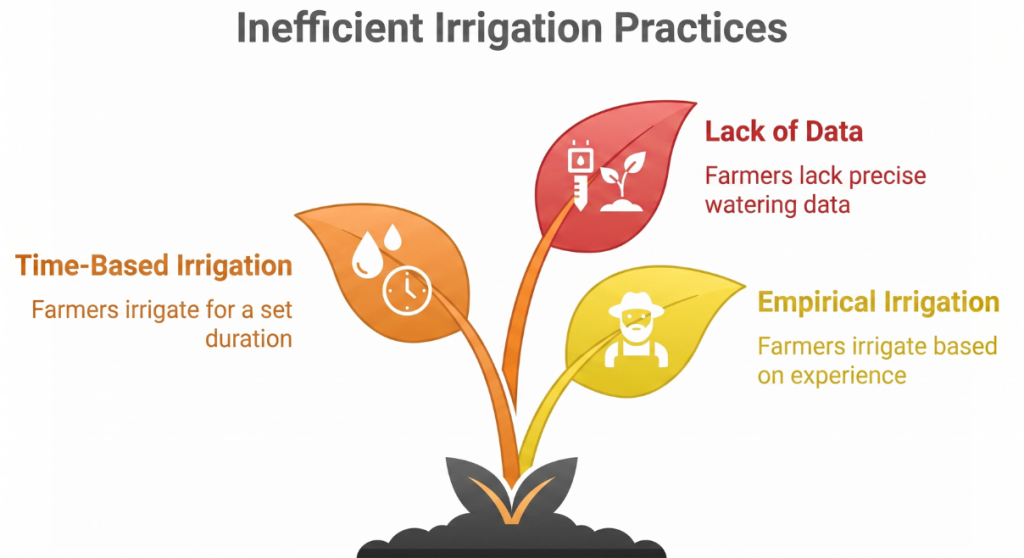
For generations, many farmers have had to rely on experience and “guesswork” to decide when and how much to water their crops. In fact, research shows that nearly 57% of farmers irrigate empirically, while others simply count the minutes the water is running.
This method often leads to over-irrigation, which causes a “double-edged” environmental problem. First, it wastes a limited and valuable resource. Second, excess water washes away expensive fertilizers, a process known as leaching, which can pollute groundwater and leave the soil nutrient-poor which leads to soil degradation. In regions already struggling with land degradation, this cycle makes farming increasingly difficult and costly.
Eyes in the Sky: Satellite-Powered Irrigation
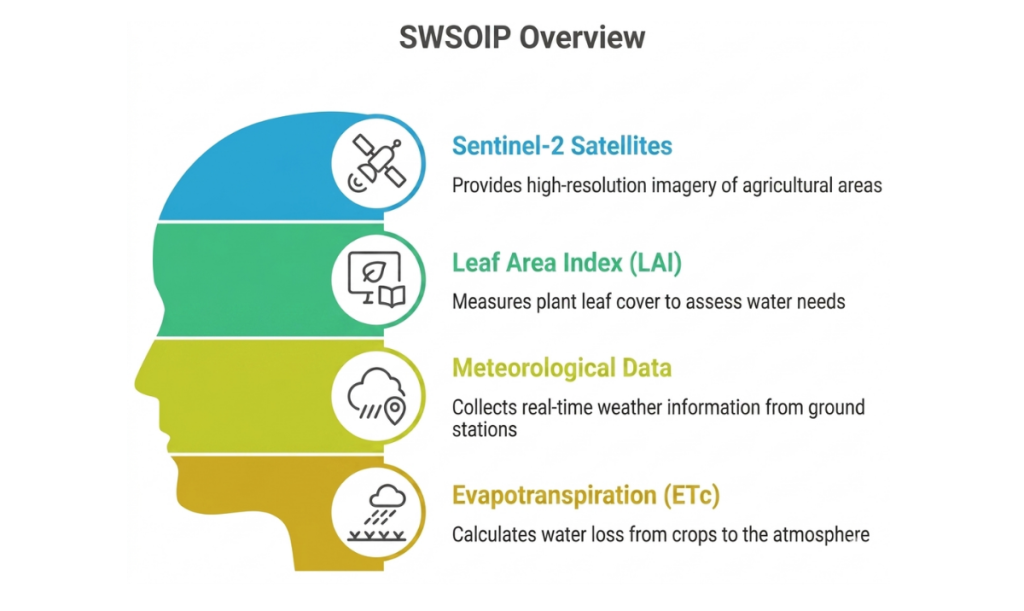
The solution to this problem is literally looking down on us. The Smart Watering System for Optimising Irrigation Process (SWSOIP) is a pioneering project that uses “eyes in the sky” to help farmers. By using European Space Agency (ESA) Sentinel-2 satellite images, the system can monitor agricultural parcels from space with incredible precision. But how does a satellite help a farmer water a potato field? It comes down to a few key pieces of data:
- Leaf Area Index (LAI): The satellite measures how much leaf cover a plant has. This tells us the size of the “interface” where the plant exchanges energy and water with the atmosphere.
- Meteorological Data: On-the-ground weather stations measure real-time temperature, wind speed, humidity, and rainfall.
- Evapotranspiration (ETc): By combining satellite “greenness” with weather data, the system calculates exactly how much water a crop is losing to the air.
The “Smart Valve” in Action
The real magic happens through the Smart CropWATER Valve. Once the system determines the precise water demand for a specific crop it automatically releases the optimum quantity of water. This happens without any human intervention, ensuring the plant gets exactly what it needs to thrive. This technology is a game-changer for sustainability. Because the system targets the actual biological need of the plant, it achieves significant water savings. It also keeps fertilizers in the root zone, which improves crop quality and protects the environment from chemical runoff. Furthermore, the entire Smart CropWATER Valve setup is 100% energy autonomous, powered by renewable solar energy.

Working Smarter, Not Harder
Beyond the environmental benefits, this “smart” approach is designed to make life easier for the people who feed us. Farmers can monitor their fields in real-time through a user-friendly mobile application. They receive daily notifications about their crop water needs and status updates on their automated valves.
Users of the system have already reported major advantages, including time savings and reduced workloads. For younger generations of farmers who are more comfortable with digital tools, this technology offers a path toward a more profitable and resilient future.
As we face a future with more people to feed and less water to go around, the SWSOIP project shows that by aligning space-age technology with ground-level wisdom, we can protect our land and our water for generations to come.


